ISO Color Coding for Gutta Percha Points — Complete Guide (#15 to #40)
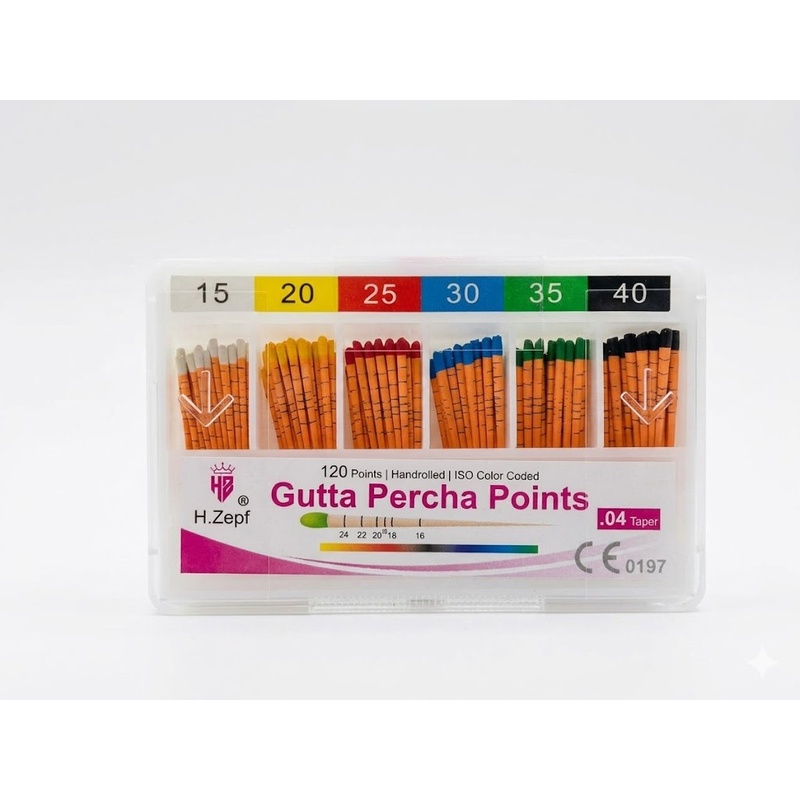
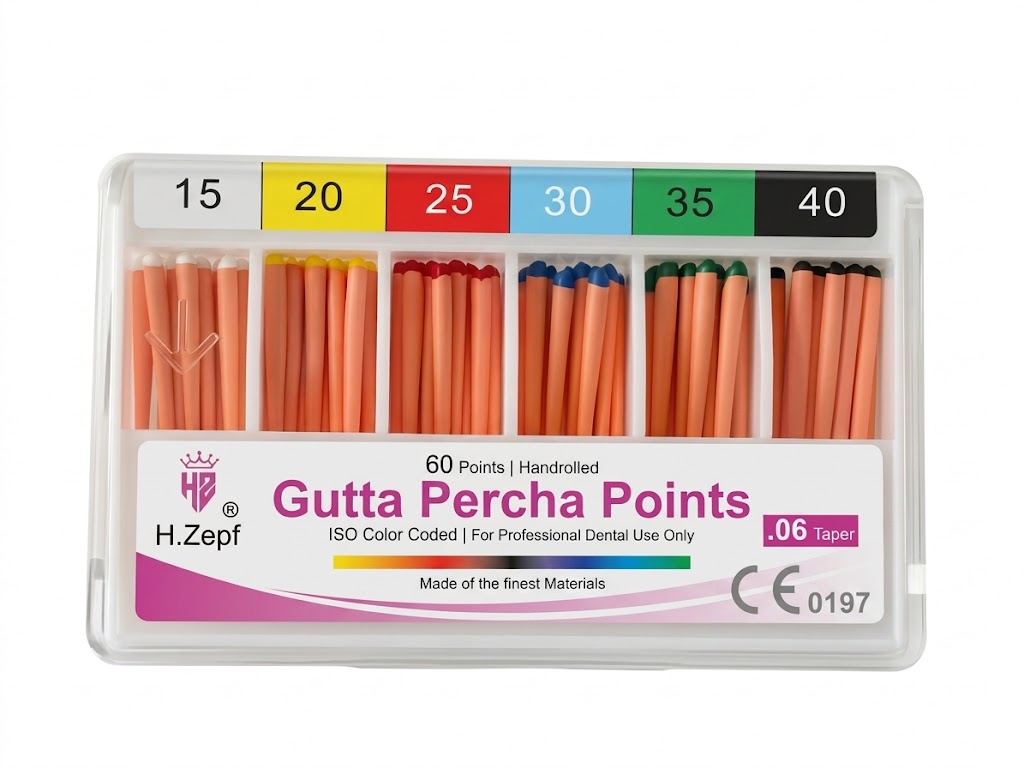
Walk into any dental supply store or open a box of Gutta Percha Points, and the first thing you notice is the color. White, yellow, red, blue, green, black — each color tells you exactly what size you are looking at. This is the ISO color coding system, and understanding it is fundamental for every dental professional and dealer working with endodontic materials.
In this guide, we will cover the complete ISO color coding system for Gutta Percha Points, explain why standardization matters, and help you understand exactly what each color means in clinical practice.
What Is ISO Color Coding?
ISO color coding is an internationally standardized system developed by the International Organization for Standardization (ISO) to ensure consistent identification of endodontic instruments and materials across manufacturers and countries.
The same color coding system applies to:
- Hand files (K-files, H-files, reamers)
- Gutta Percha Points (master cones)
- Absorbent Paper Points
- Accessory Gutta Percha Points
This means that a red #25 Gutta Percha Point will always correspond to a red #25 K-file, making matching simple, fast, and error-free during root canal procedures.
The Complete ISO Color Code Chart
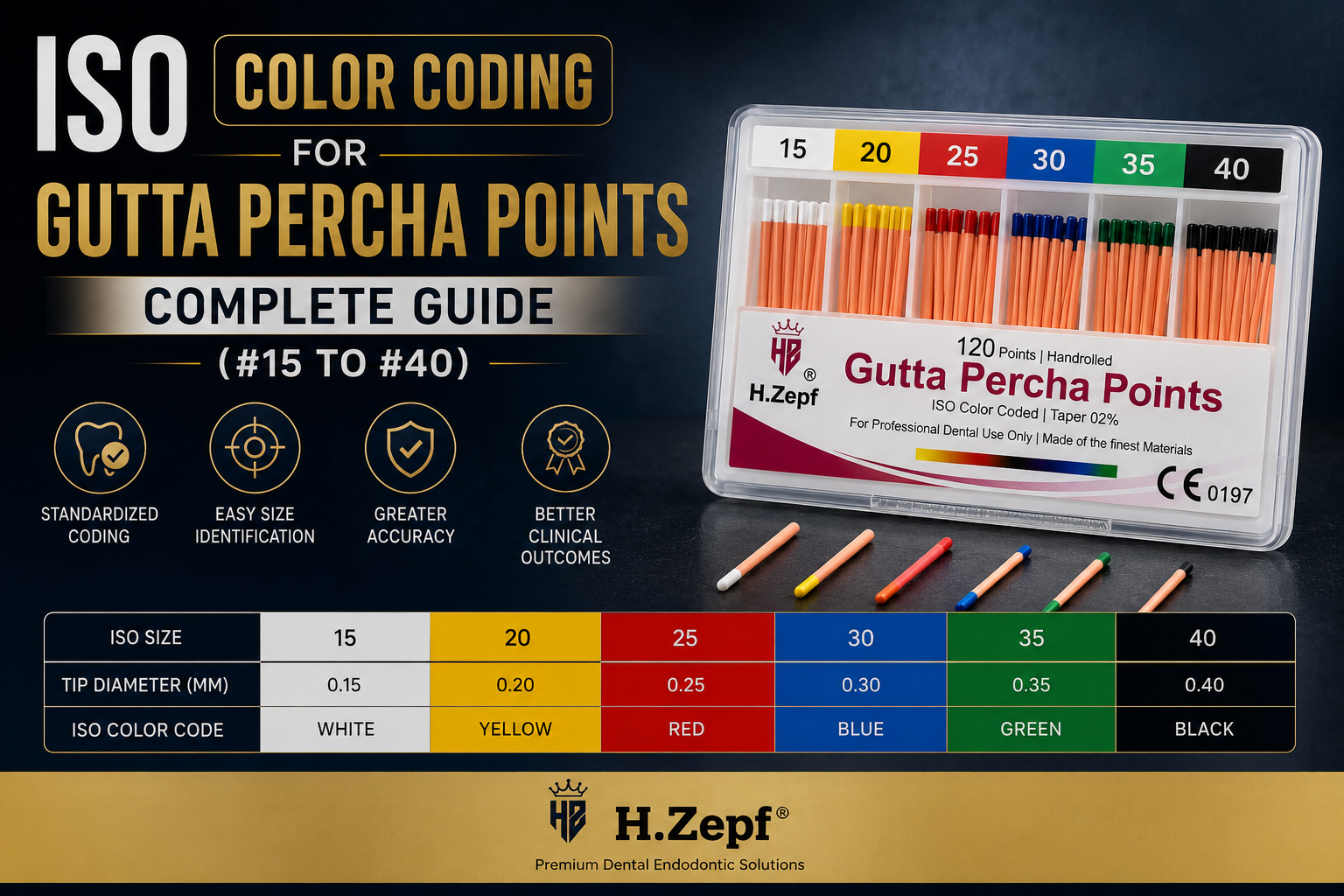
| Size | Color | Tip Diameter (D0) | Clinical Use |
|---|---|---|---|
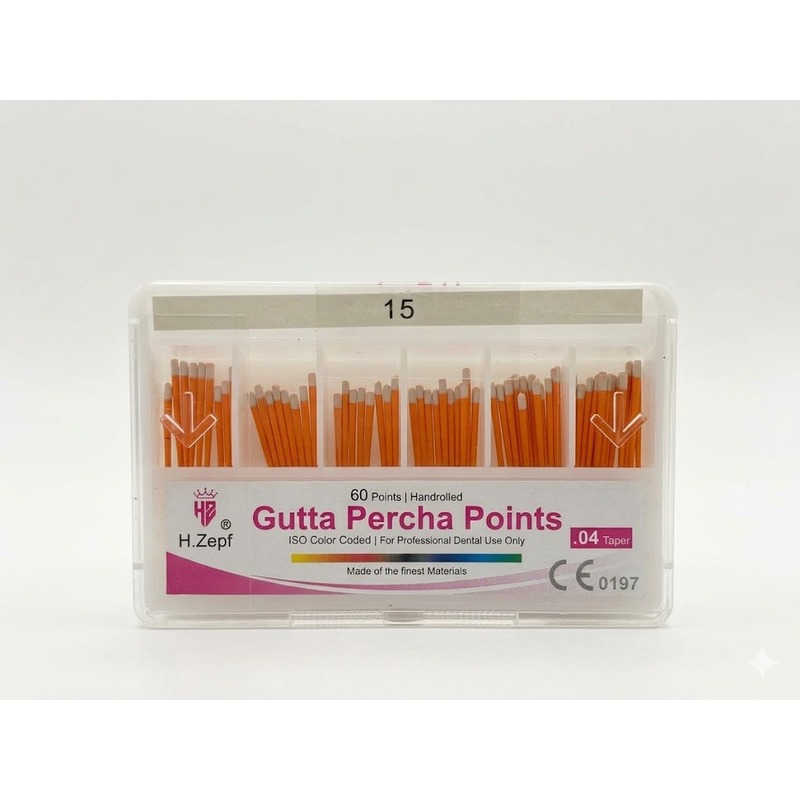
| #15 | White | 0.15mm | Narrow, curved canals — initial enlargement |
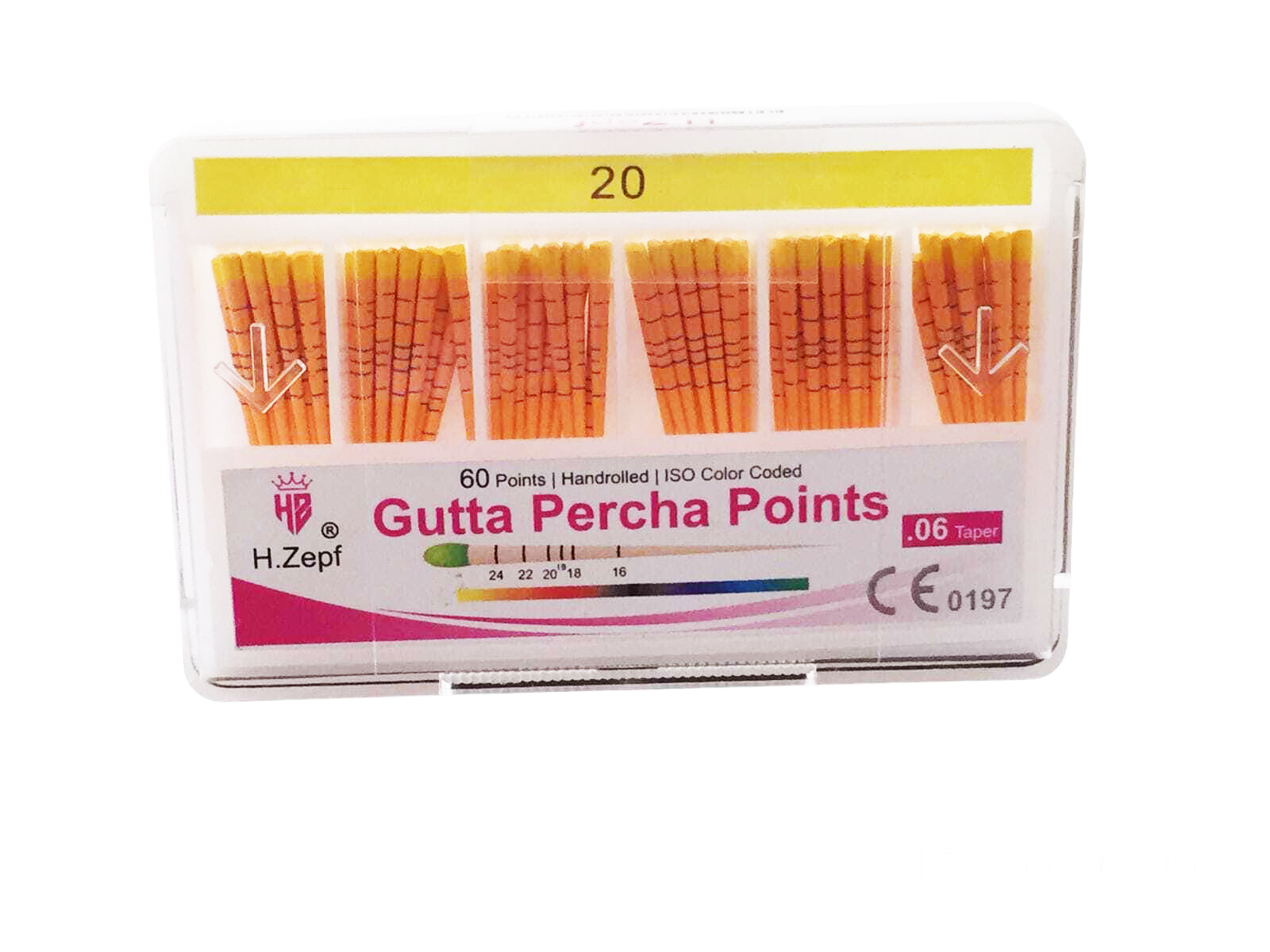
| #20 | Yellow | 0.20mm | Small canals — frequently used in lateral condensation |
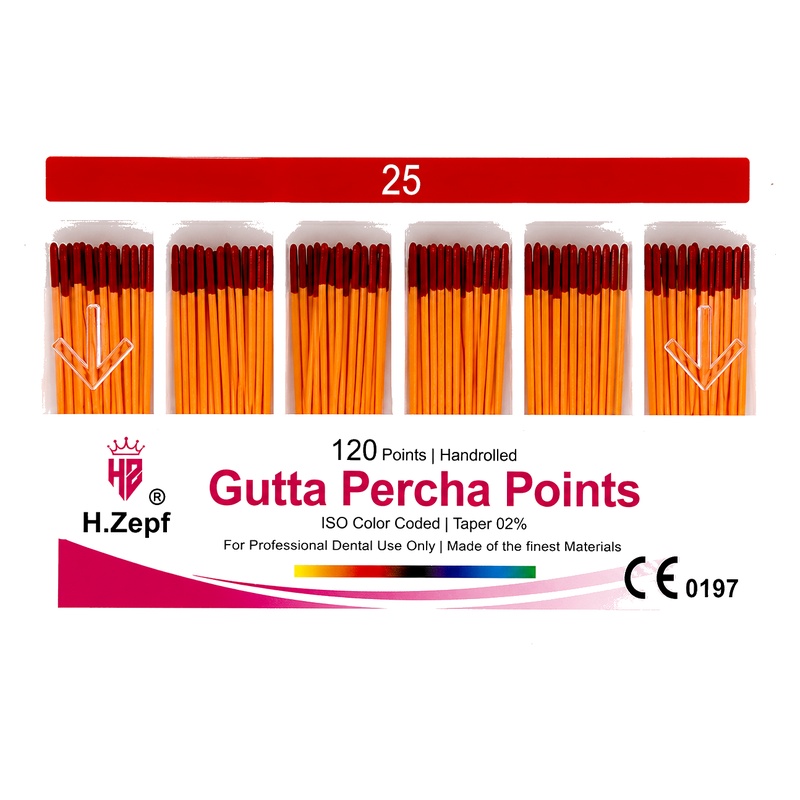
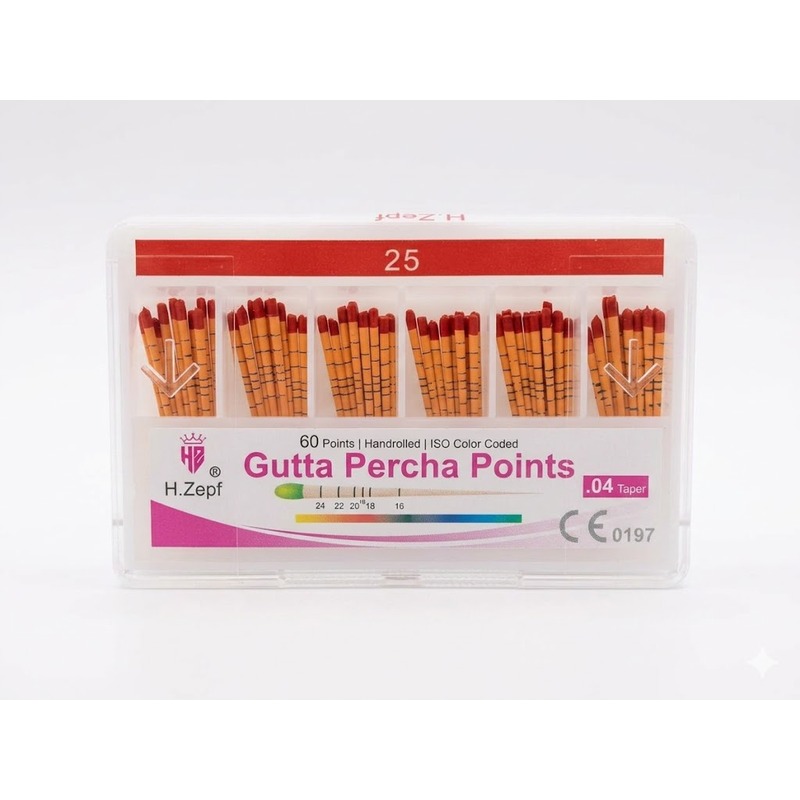
| #25 | Red | 0.25mm | Most common master cone size in clinical practice |
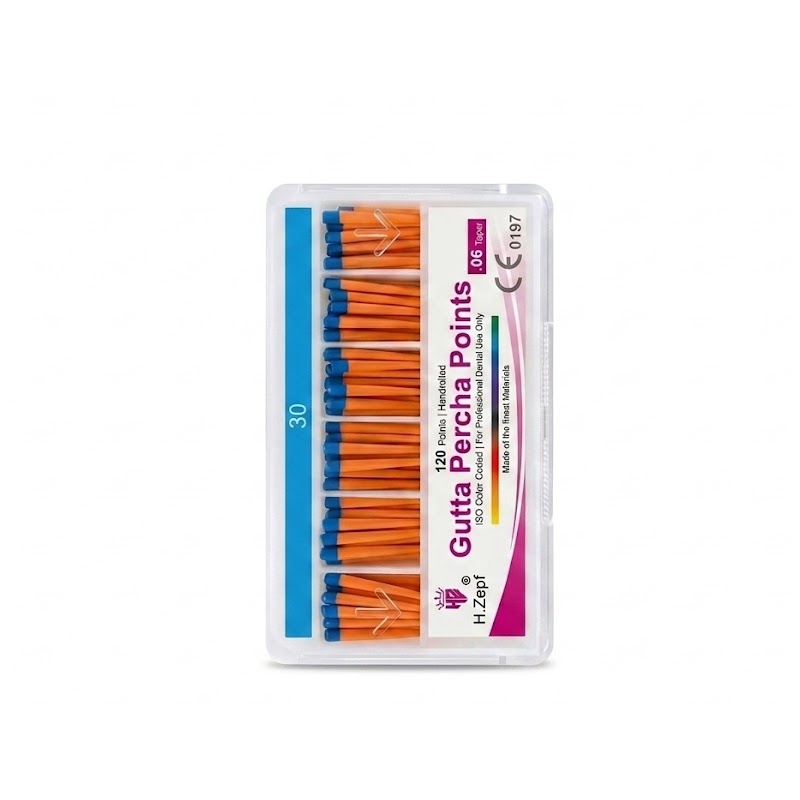
| #30 | Blue | 0.30mm | Moderate canals — widely used in general practice |
| #35 | Green | 0.35mm | Larger canals — anterior teeth, wide posterior canals |
| #40 | Black | 0.40mm | Wide canals — retreatment cases, large anterior roots |
Size #15 — White
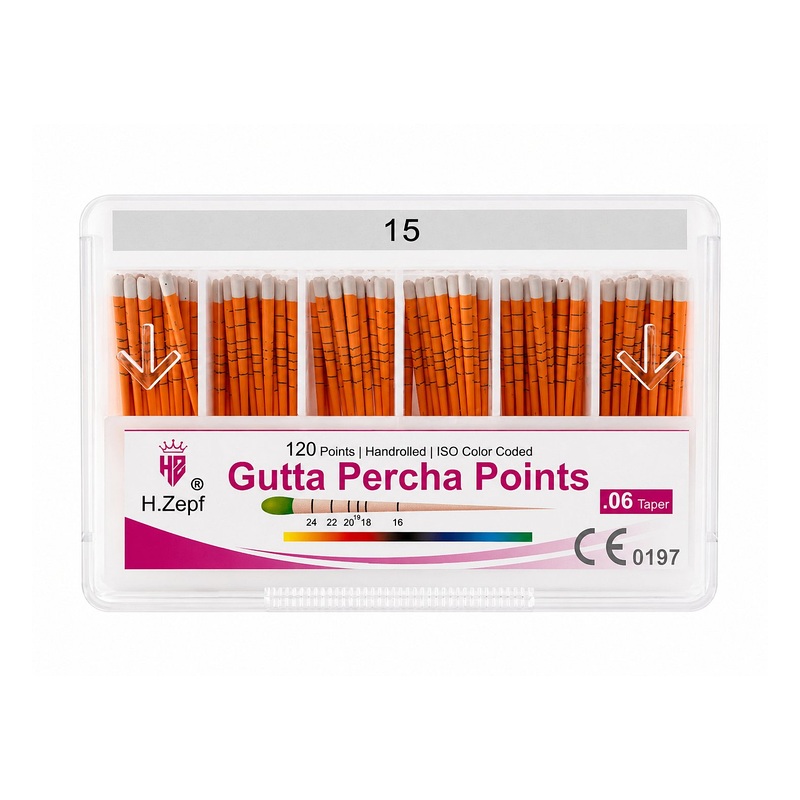
The #15 white Gutta Percha Point is the smallest in the standard range. It is used in narrow, fine canals — particularly in cases where instrumentation was conservative. In most rotary systems, #15 is rarely used as a master cone but is commonly used as an accessory cone during lateral condensation in larger canals.
Typical use: Narrow curved canals, fine mesiobuccal roots of upper molars, lower premolars with thin roots.
Size #20 — Yellow
The #20 yellow point is slightly larger and is commonly used as an accessory cone during lateral condensation. When canals are prepared conservatively with hand files to a #20 final file, this becomes the master cone.
Typical use: Accessory cones in lateral condensation, master cone in minimally prepared canals, fine accessory roots.
Size #25 — Red
The #25 red Gutta Percha Point is arguably the most frequently used size in clinical endodontics. Most rotary instrumentation protocols end at a #25 tip size (.04 or .06 taper), making the #25 the standard master cone for a large proportion of cases.
Typical use: Master cone for most rotary instrumentation cases, mesiobuccal canals of upper molars, mesial canals of lower molars, lower premolars.
Size #30 — Blue
The #30 blue point is used when canals require slightly more enlargement. It is commonly the master cone for distal canals of lower molars and palatal roots of upper molars when moderate preparation is performed.
Typical use: Distal canals of lower molars, palatal roots of upper molars, wider premolar canals.
Size #35 — Green
The #35 green Gutta Percha Point is used for larger canals, particularly in anterior teeth and cases where the canal has been shaped aggressively. Upper central incisors and canines often require a #35 master cone.
Typical use: Upper anterior teeth, lower central and lateral incisors with large canals, retreatment cases.
Size #40 — Black
The #40 black is the largest in the standard range. It is used in wide canals that require significant enlargement — retreatment cases, upper anterior teeth with large root canals, and cases of internal resorption.
Typical use: Retreatment cases, wide anterior root canals, internal resorption cases.
Why Does Color Coding Matter?
During a root canal procedure, the operatory environment is busy — instruments, irrigation syringes, paper points, and Gutta Percha Points all need to be identified quickly and accurately. The ISO color coding system eliminates the need to read tiny numbers on each instrument or cone during treatment.
Benefits of ISO color coding:
- Speed — instant size identification at a glance
- Safety — reduces risk of using wrong size instrument or cone
- Consistency — same colors across all compliant brands worldwide
- Simplicity — easy to train assistants on size identification
- Universal — any ISO-compliant Gutta Percha Point matches the corresponding file
Matching Gutta Percha Points to Files — The Essential Rule
The golden rule of obturation is simple: your master cone size must match your final file size. Here is how it works in practice:
- You prepare the canal with a rotary system to a final file of #25 .06 taper
- You select a #25 red Gutta Percha Point in .06 taper
- The point should fit snugly at working length with tug-back resistance
- Verify with a radiograph before final obturation
When the size and taper match perfectly, you need minimal or no lateral condensation — a single cone fills the canal completely and uniformly.
What to Check When Buying ISO Color Coded GP Points
Not all Gutta Percha Points on the market are manufactured to strict ISO standards. When purchasing, look for:
- Consistent color intensity — the color bands should be uniform and clearly visible
- Accurate tip diameter — the tip must correspond precisely to the stated size
- CE certification marking — confirms compliance with European medical device standards
- Lot number and expiry date — important for traceability and quality control
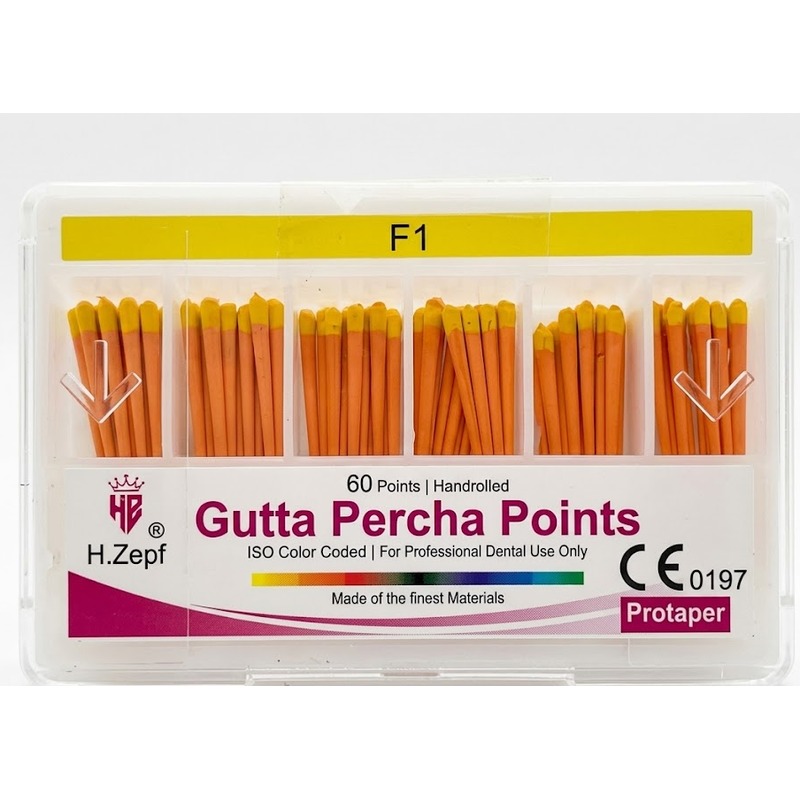
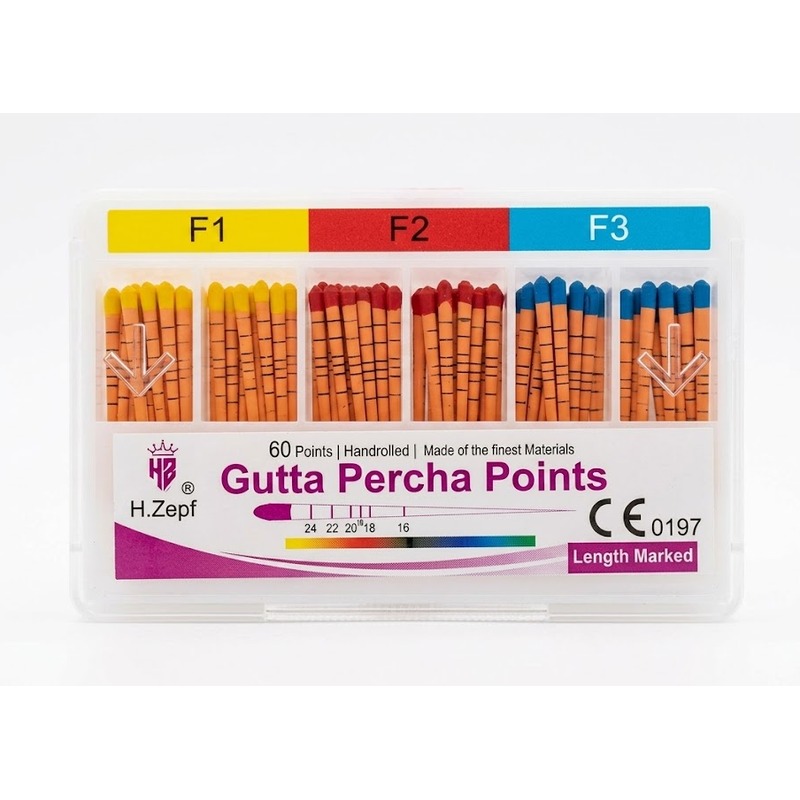
- Organized packaging — 60 points in a clear case with size labels
H.Zepf ISO Color Coded Gutta Percha Points
H.Zepf Gutta Percha Points are manufactured to full ISO compliance, with precise color coding across all sizes from #15 to #40. Each box of 60 points is clearly organized in a labeled case — making size identification instant during busy clinical sessions.
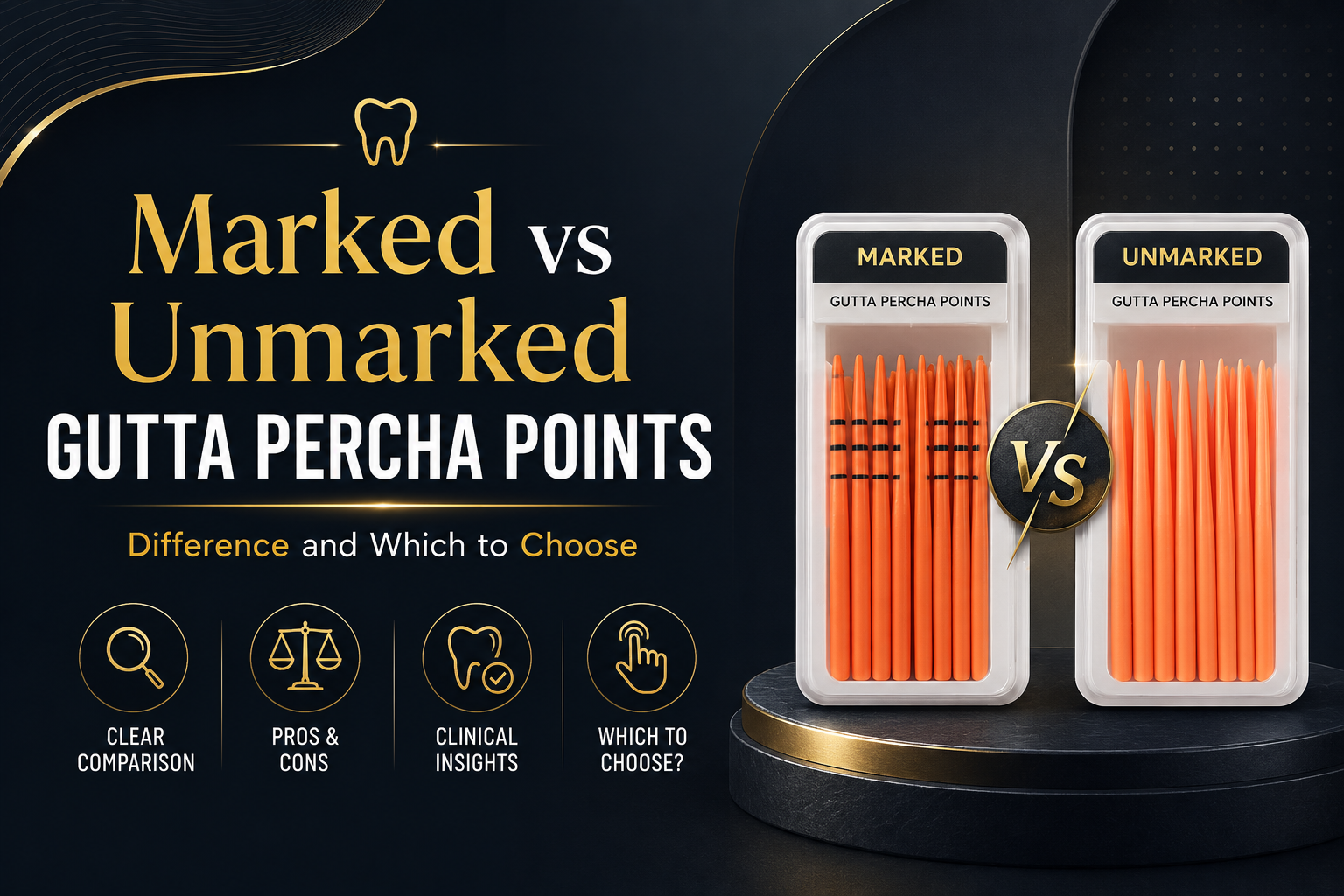
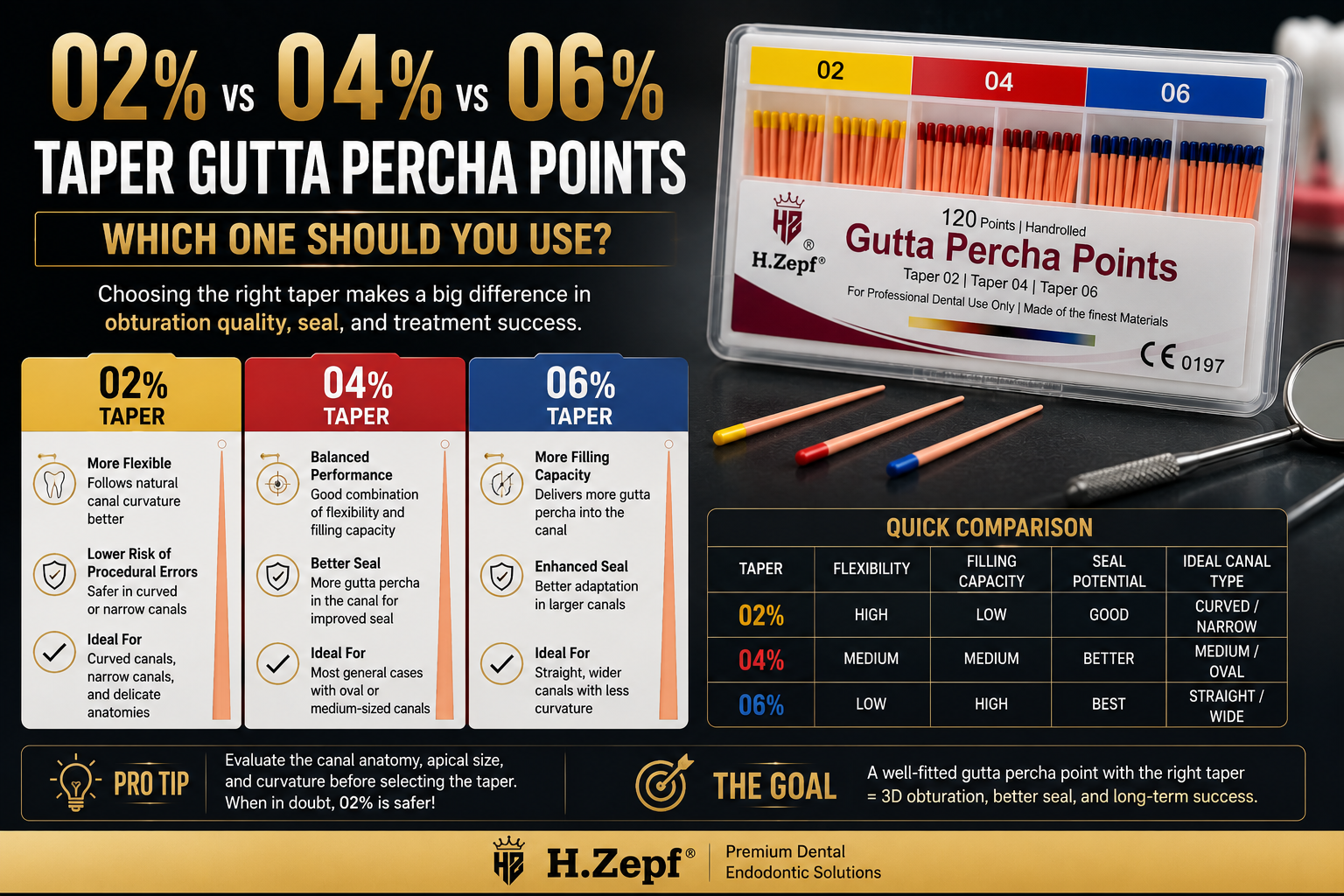
Available in .02, .04, and .06 taper — marked and unmarked variants — H.Zepf gives you complete flexibility to match any instrumentation protocol.
View our full range of ISO Color Coded Gutta Percha Points, or contact us on WhatsApp for wholesale and dealer pricing.