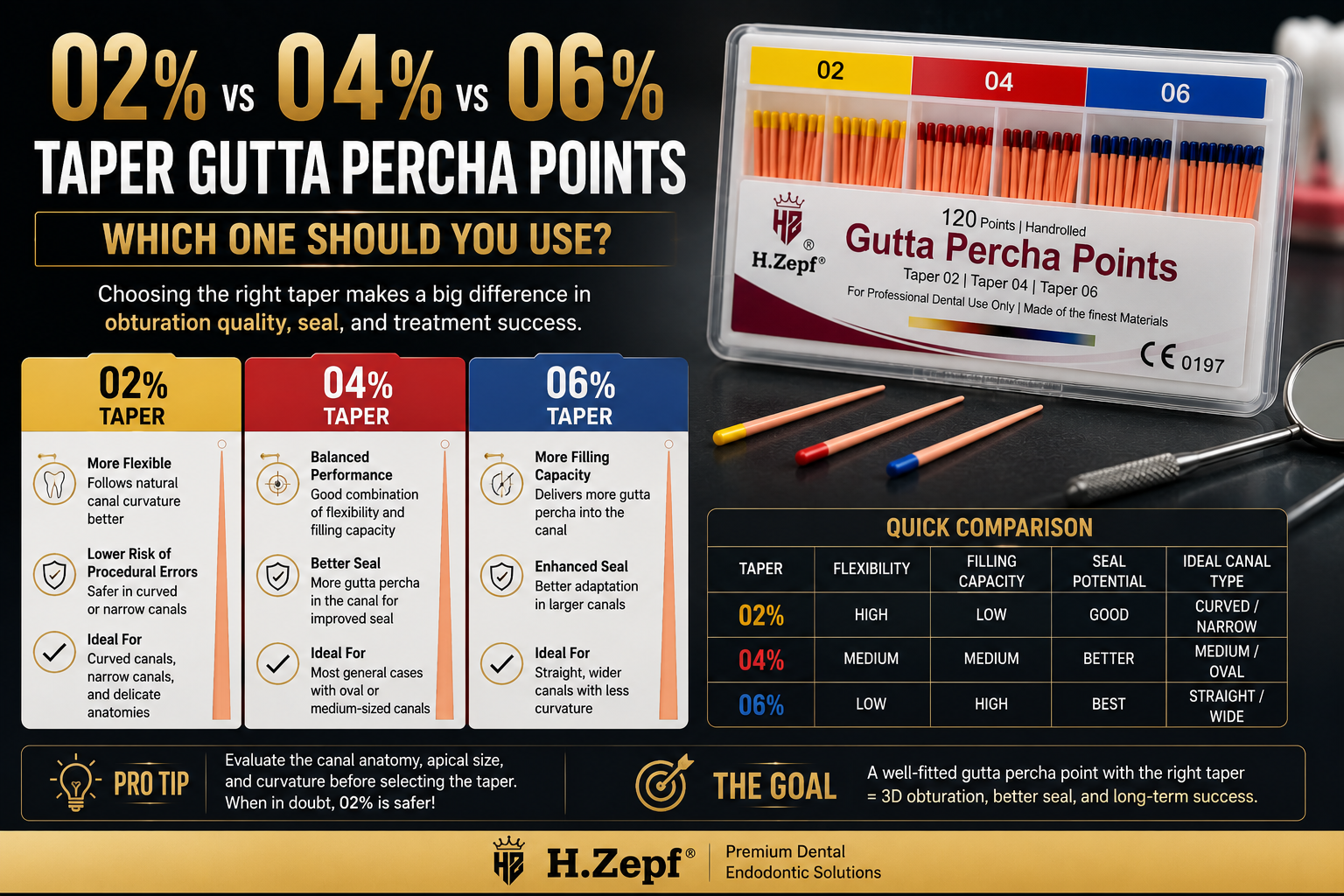
02% vs 04% vs 06% Taper Gutta Percha Points — Which One Should You Use?
One of the most common questions from dental professionals and dealers is: what is the difference between 02, 04, and 06 taper Gutta Percha Points? With so many options available, choosing the right taper can be confusing — especially if you are building your clinic's inventory or placing a bulk order.
This guide explains everything you need to know about taper variations in Gutta Percha Points, when to use each, and how to match them to your instrumentation system.
Understanding Taper: What Does It Mean?
The taper of a Gutta Percha Point refers to how much the diameter of the point increases per millimeter of length. It is expressed as a percentage or decimal:
- .02 taper (2%) — the diameter increases by 0.02mm for every 1mm of length
- .04 taper (4%) — the diameter increases by 0.04mm for every 1mm of length
- .06 taper (6%) — the diameter increases by 0.06mm for every 1mm of length
Simply put, a higher taper means the point gets wider faster as you move from tip to top. This directly affects how well the Gutta Percha Point fills the canal space created by your instrumentation.
Key Rule: The taper of your Gutta Percha Point should always match the taper of the final instrument used to prepare the root canal. A mismatch leads to voids, poor seal, and potential treatment failure.
.02 Taper — The Traditional Standard
What Is It?
The .02 taper is the original ISO standardized taper for Gutta Percha Points, designed to match traditional stainless steel hand files (K-files, H-files, reamers). It is the most conservative taper available.
When to Use .02 Taper
- When root canal preparation was done with hand files only
- For narrow, curved canals where minimal preparation is preferred
- When using the step-back technique with hand instrumentation
- In cases where conservative canal preparation is desired
Advantages of .02 Taper
- Preserves maximum dentin — minimal material removal
- Ideal for narrow or calcified canals
- Lower risk of perforation in curved canals
- Compatible with traditional hand instrumentation protocols
Limitations
- Requires more accessory cones for lateral condensation
- Not compatible with rotary systems that create higher tapers
- Longer obturation time compared to matched-taper techniques
.04 Taper — The Versatile Middle Ground
What Is It?
The .04 taper Gutta Percha Point was developed alongside the growth of rotary endodontics. Many popular rotary NiTi file systems prepare canals with a .04 taper, making these points a natural match.
When to Use .04 Taper
- When final canal preparation was done with .04 taper rotary files
- For single-cone obturation technique with .04 systems
- In moderately curved canals where balanced preparation is needed
- When a balance between canal preservation and obturation efficiency is desired
Advantages of .04 Taper
- Excellent single-cone fit when matched to .04 rotary preparation
- Faster obturation than .02 taper cold lateral condensation
- Good canal seal with minimal sealer required
- Compatible with most modern rotary systems
- Suitable for warm vertical compaction techniques
Limitations
- Not suitable for canals prepared with .06 taper instruments
- Slightly more dentin removal compared to .02 preparation
.06 Taper — Maximum Efficiency for Rotary Systems
What Is It?
The .06 taper Gutta Percha Point is designed for use with aggressive rotary instrumentation systems that create a wider taper. It is the most widely used taper in modern endodontic practice globally.
When to Use .06 Taper
- When final preparation was done with .06 taper rotary NiTi files
- For single-cone obturation — one point fills the entire canal
- In retreatment cases where canals have been previously enlarged
- For warm vertical compaction techniques
- When speed and efficiency are prioritized in a busy practice
Advantages of .06 Taper
- Fastest obturation — single-cone technique possible
- Excellent fit and seal with matched rotary preparation
- Less sealer needed — more predictable results
- Ideal for high-volume practices
- Most commonly used in modern endodontic protocols
Limitations
- More dentin removal than .02 or .04 preparation
- Not suitable for narrow or highly curved canals
- Requires a rotary instrumentation system for proper canal preparation
Quick Comparison Table
| Feature | .02 Taper | .04 Taper | .06 Taper |
|---|---|---|---|
| Diameter increase/mm | 0.02mm | 0.04mm | 0.06mm |
| Compatible with | Hand files | Rotary .04 | Rotary .06 |
| Obturation technique | Lateral condensation | Single cone / lateral | Single cone |
| Canal preservation | Maximum | Moderate | Minimal |
| Speed | Slowest | Moderate | Fastest |
| Best for | Curved/narrow canals | Most cases | High volume / retreatment |
Which Taper Should You Stock?
For dental dealers and distributors, the question of which tapers to stock is important for meeting your customers' needs. Here is our recommendation based on clinic type:
- General dental clinics (hand files only) — primarily .02 taper
- Mixed practices (hand + rotary) — stock all three tapers
- Specialist endodontic practices — primarily .04 and .06 taper
- High-volume clinics — primarily .06 taper
As a rule of thumb, .06 taper is the fastest-moving product for most dealers, followed by .04 taper. The shift to rotary endodontics has made these two tapers the dominant choice in modern dental practice.
H.Zepf Gutta Percha Points — Available in All Tapers
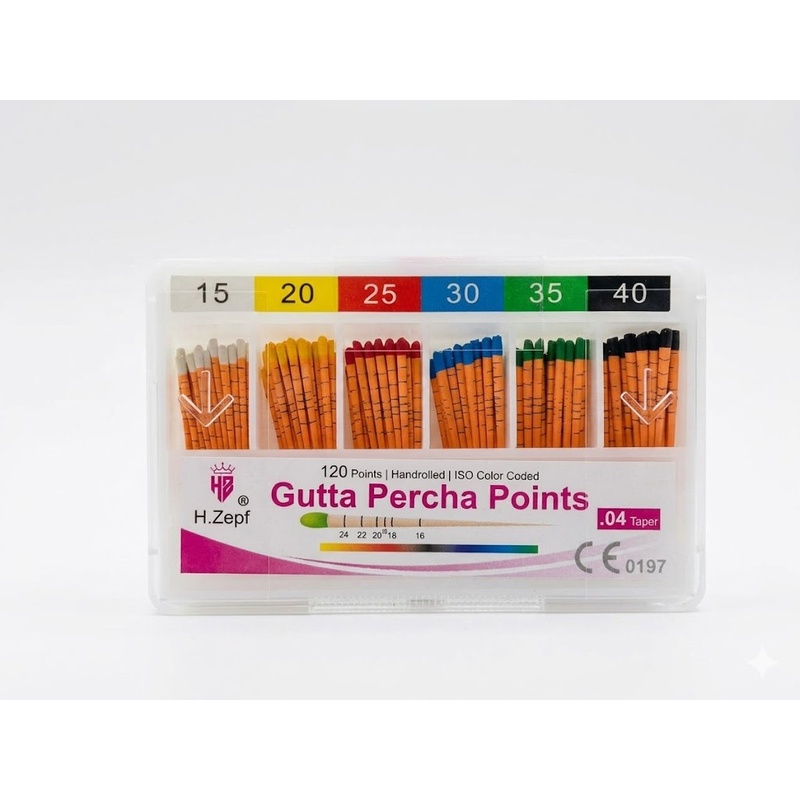
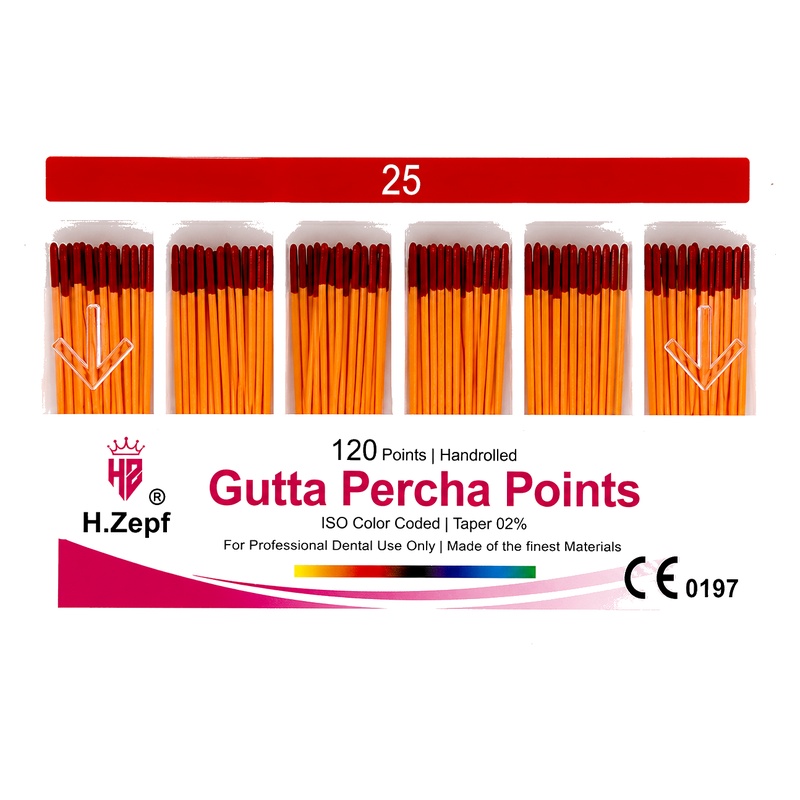
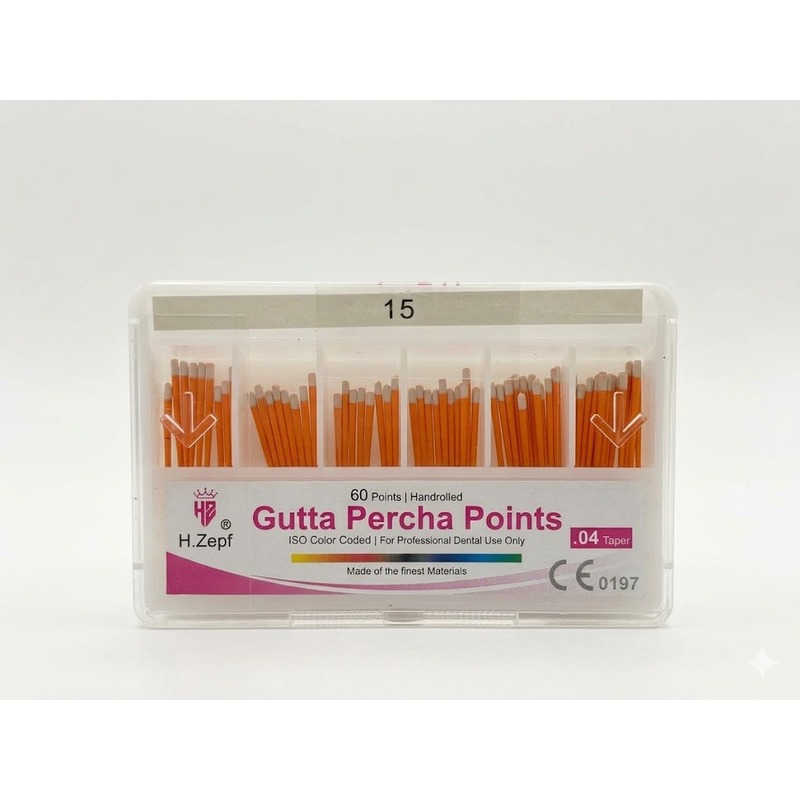
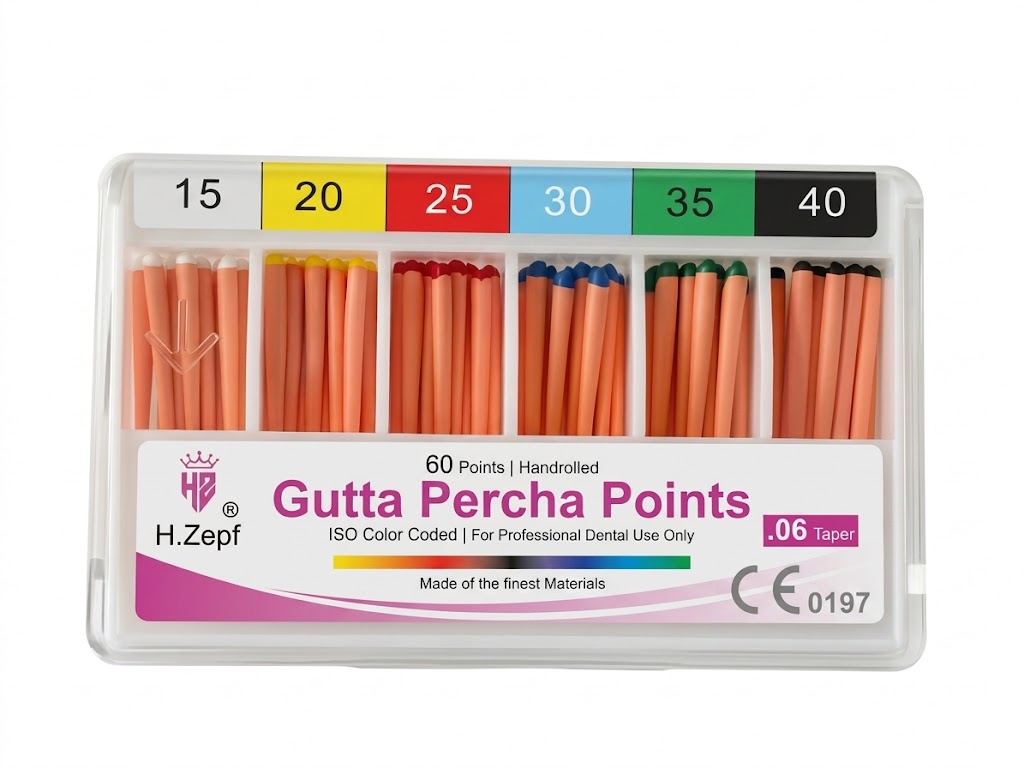
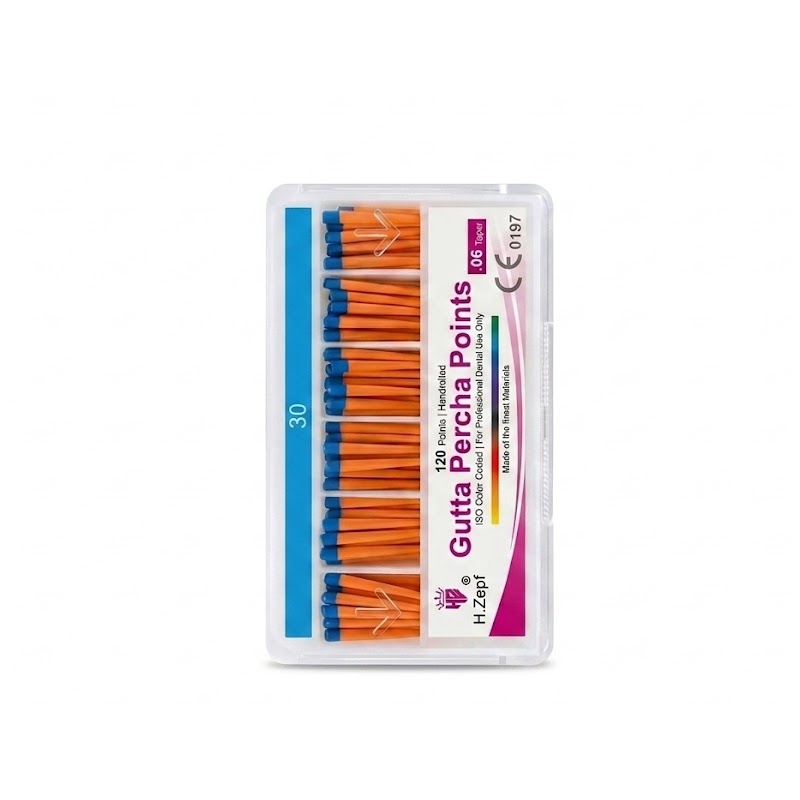
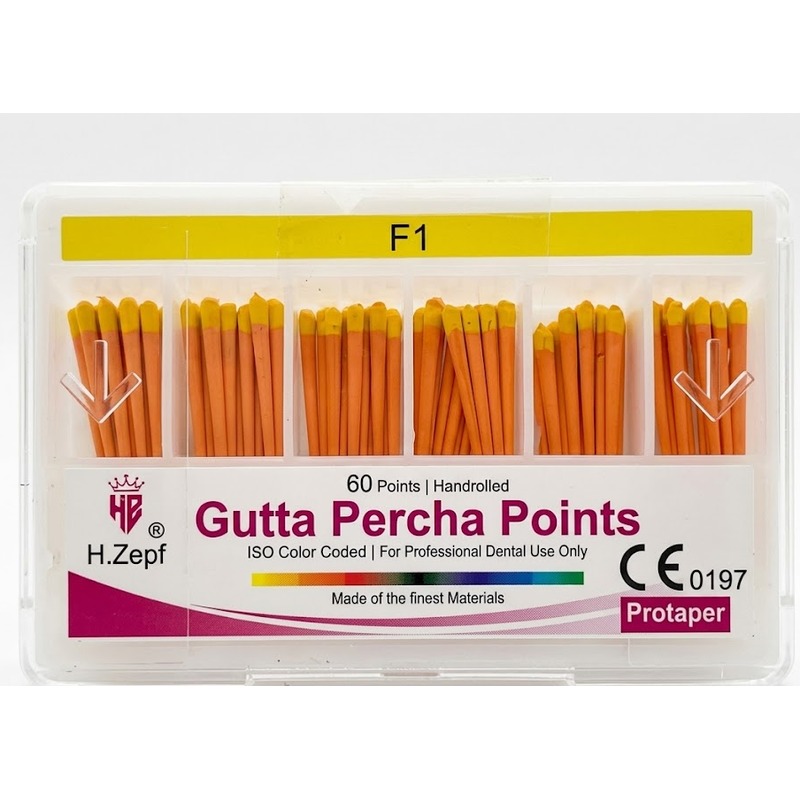
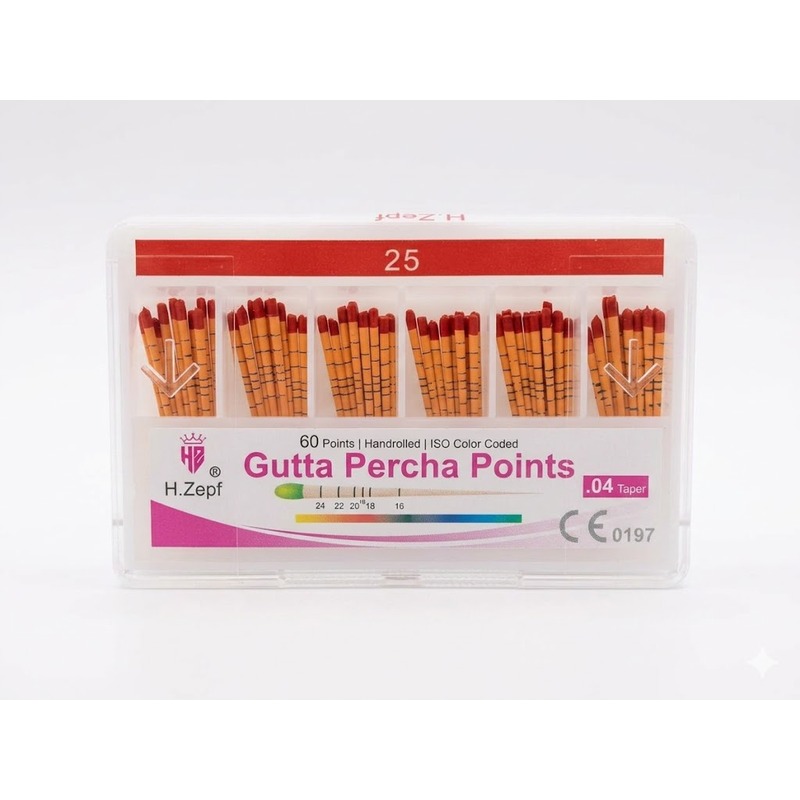
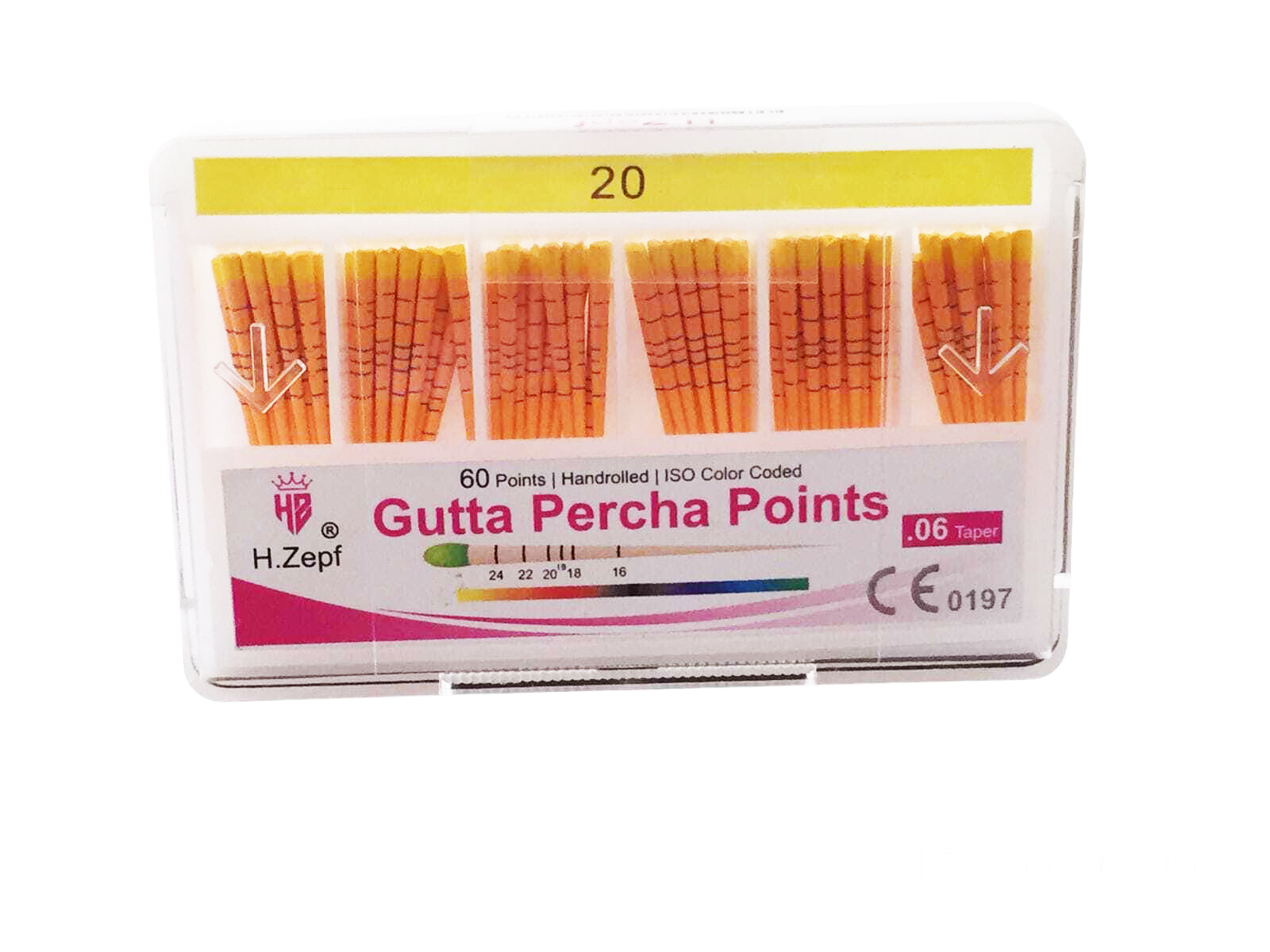
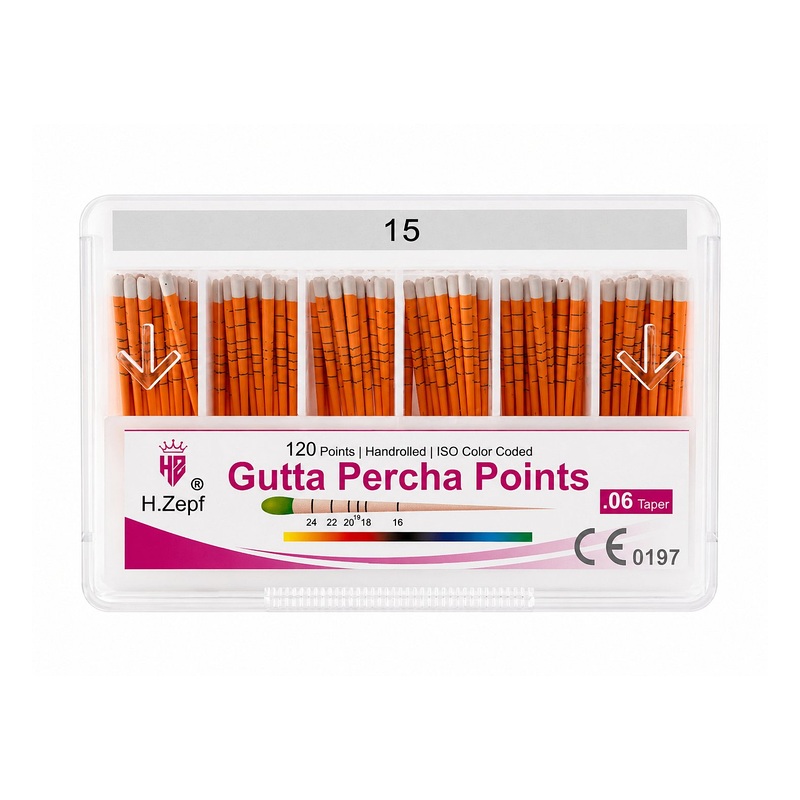
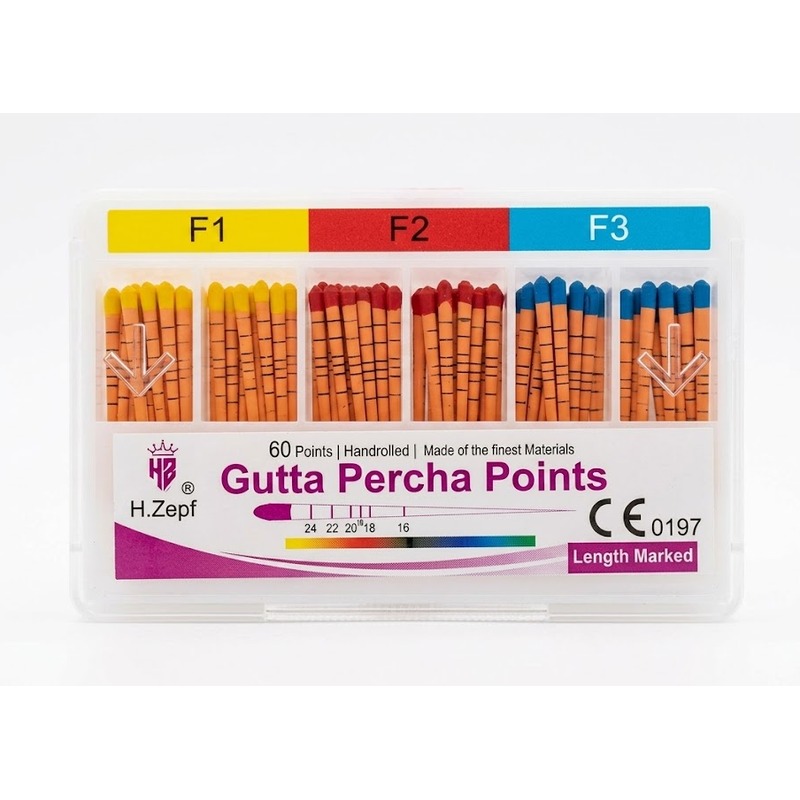
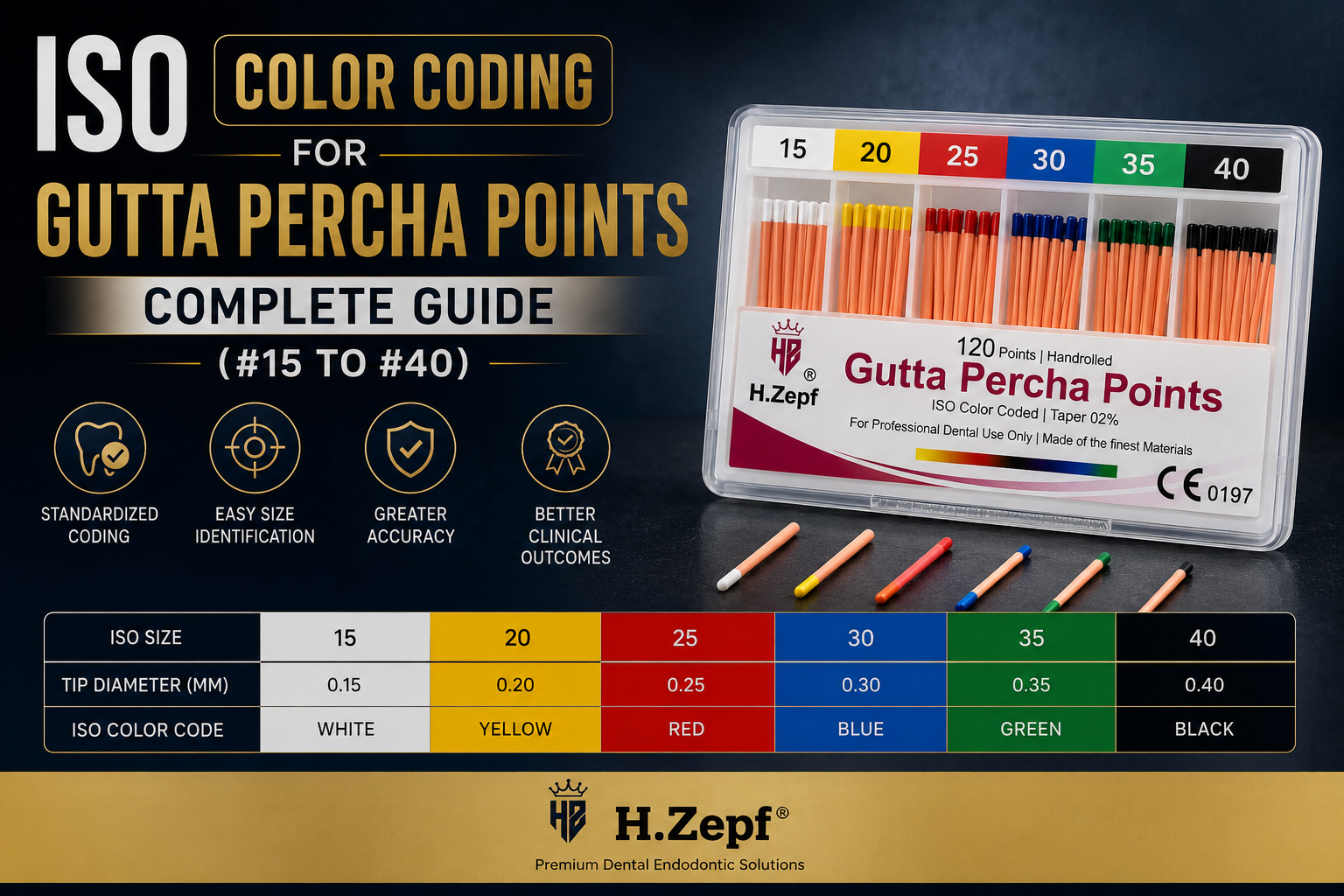
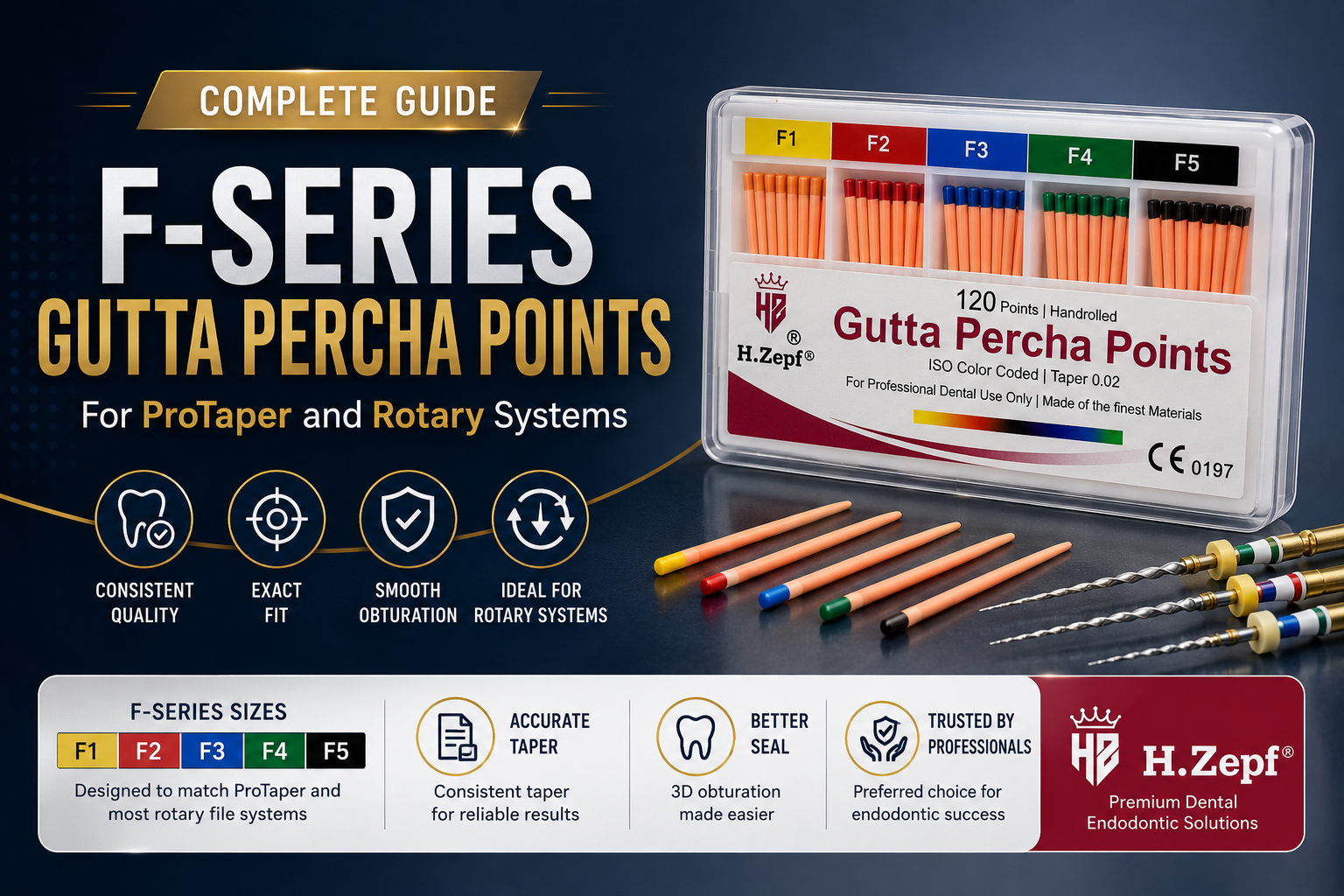
H.Zepf Gutta Percha Points are available in .02, .04, and .06 taper — in both marked and unmarked variants, covering sizes #15 through #40. Each box contains 60 ISO color-coded, hand-rolled points in a clearly organized case.
Whether you are a dentist looking to switch to rotary obturation or a dealer stocking your inventory for maximum sales, H.Zepf provides consistent quality at competitive wholesale prices.
Browse our full range: Gutta Percha Points — or WhatsApp us for bulk pricing and dealer rates.